Blog Feed

Drugs!

Opdivo is a monoclonal antibody that works to help T cells in their destruction of cancer cells. Monoclonal antibodies are those that are made from all identical immune cells who have originated from the same starting parent. As a result, they all bind to the same antigen, as they have the same structure. The drug nivolumab, known as Opdivo, is one of these. How does it work? It is designed to specifically help T cells recognized cancer cells that may be “disguised” in the body. In doing so, it could reduce tumors. Specifically, the manufacturer states that Opdivo can bind to the PD-1 receptor on T cells, thereby allowing T cells to be active again after being previously silenced by cancer cells.

Of course, side effects are always present. As the manufacture’s website states, these include:

  • lung problems
  • intestinal problems
  • liver problems
  • hormone gland problems
  • kidney problems, including nephritis and kidney failure
  • skin problems
  • inflammation of the brain
  • problems in other organs
  • severe infusion reactions
  • fatigue
  • rash
  • musculoskeletal pain
  • diarrhea
  • nausea
  • cough
  • constipation
  • decreased appetite
  • back pain
  • vomiting
  • headache
  • abdominal pain

WOW! Now that is a long list.

Photo by Alexander Krivitskiy on Pexels.com

When looking at these side effects, it is important to consider the original issue the drug was targeting. This is a cancer fighting drug. With this, the individual is likely immunocompromised and at more risk than normal to adverse effects. Noticing this, things like organ issues/failures may only progress the seriousness of the patients condition. More so, if this drug can cause your T cells to attack cancer cells, there is a chance that it causes self destruction against other beneficial cells throughout your body. Consequently, this drug could potentially self-attack.

As per the FDA, this drug could potentially make one more susceptible to any condition that already makes someone immunocompromised. For example, someone that takes this drug and has HIV/AIDS may be at an even more risk against things like pneumonia. The FDA suggests that administration should be discontinued if the patient experiences any immune-mediated reaction including but not limited to, pneumonitis, colitis, and hepatitis. As such, by targeting T cells and allowing them to become active again, Opdivo operates on acquired immune response and causes a positive effect. Although, negative effects, as mentioned above, are possible. Consult a professional about whether this drug is good for you.

The Search for Antibodies

Late is better than never right? We needed tests for the nasty virus spreading across the world and it seems like we are finally beginning to pump them out. But what do these tests look for? And what exactly can these results tell us? As of now, antibodies of IgM and IgG can tell us a lot about what is going on in your body in relation to COVID-19. Follow me, your non-qualified specialist in the antibody response for COVID-19.

The FDA does a good job explaining the results of a current test, the qSARS-CoV-2 IgG/IgM Rapid Test. Basically, this test can plasma, serum, or whole blood samples and analyzes the amount of IgG and IgM in these. If IgM antibodies are present, since these are the first responders to infection, one could determine that a patient has an active or very recent infection with COVID0-19. Let’s just say you don’t want to see a positive sign for this. Since it takes longer for IgG antibodies to be present, about 7-10 days, this could signal to the professional that the patient had a past infection. With all this information however, the FDA wants to make CLEAR that these tests do NOT rule out the fact of COVID-19 infection if shown up negative. In fact, they don’t know the absolute sensitivity of the test itself. AHHH!!

Photo by Andrea Piacquadio on Pexels.com

This is just one test however. There continue to be studies, attempting to hone in on what exactly the immune response would look like in order for someone to be tested positive for this virus. A study looked at the relationship between COVID-19 immune response and related coronaviruses such as SARS and MERS. With limited patient studies out, they found that this virus mounted an immune response that was most similar to SARS than any other coronavirus. In one patient they found that it took approximately 9 days to show a peak in the IgM antibody and switched to IgG when it reached 2 weeks. Deciding just what titers are specific to the disease severity could prove to be very important in creating a vaccine. We are in this together. Cooperativity from all nations and scientists could speed this up. Stay strong everyone, we can do this!

Photo by Prateek Katyal on Pexels.com

Treatment for Future Health

In our ongoing battle against cancer, we continue to find new ways to fight it. In light of lung cancer, surgery and chemo/radiotherapy seem to only slightly improve the the survival of patients. What if, we were able to tackle this problem by boosting our health, or allowing our own body to defeat the cancerous tumor? With this in mind, new technology and an urgent need to find a better option has produced some promising alternatives. In comes T cell and dendritic cell therapy. What is this? Many describe it as a cancer “vaccine” of sorts that arises from your own blood.

How do these work? Dendritic cells that are immature are taken from your bone marrow and are then exposed to antigens. These cells are able to mature and then migrate to the lymph node. A study shows that it is here where they are recruited to the tumor microenvironment. A specific progenitor of a DC cell is the pDC cell. These are able to secret interferon alpha and beta when stimulated with toll-like receptor agonists. Subsequently, they are able to induce cell growth. The pathway by which they do so is depicted below.

image
Biological function of DC subtypes in the tumor microenvironment

With every therapy there are bound to be adverse effects that result. While this therapy is beginning to gain traction as an effective treatment short-term, it is important to consider the long-term effects as well. In a study looking at CAR T cancer treatment, it was found that T cell therapy could actually pose several interesting adverse long-term side effects. This study found that 1 of 5 people in the cohort scored at least 1 standard deviation lower than the general and cancer population’s means in global mental health. Additionally, the results showed similar effects on physical health. These outcomes prove to be of importance in considering what needs to be addressed in the future. For example, should we be offering these patients more mental health services?

MeMe

Hello world. Me? I can’t really complain. This whole pandemic ordeal has caused a lot of ruckus around the world. In my own personal bubble, it has allowed me peacefully mornings on my porch, more peaceful afternoons discovering new hobbies, and incredibly peaceful nights watching movies, playing board games, or starting fires. I consider this to be one of the most stressful past 6 months of my life but, I like to take advantage of any moment that is given to me. As of right now, a lot a lot of moments have been gifted to me and I believe I am taking o-so-full advantage of it. Life just seems to have slowed down.

I’ve picked up yoga, I’ve tried to cook things, I’ve played more disc golf in the last 2 days than I have in the past 3 years, I’ve explored Carolina North Forest, I’ve played the same drinking games with the same people. It’s nice to connect with the outside world and I feel like I’ve been able to a lot more than I would if school was still “a real thing.” On top of this, 7 of my closest friends have taken this pandemic the same way I have and we have become the only people we see on a daily basis. It really isn’t all that bad if I’m being honest. With my parents living in Minnesota, it’s a heck of a lot better than being there. Things are beginning to become a tad bit monotonous but to combat this my roommates and I have decided to come up with things we desire to achieve in this limbo time of our lives. For instance, I want to become this guy(below) in my yoga practices ASAP.

Photo by theformfitness on Pexels.com

It’s nice to connect with the outside world and I feel like I’ve been able to a lot more than I would if school was still “a real thing.” On top of this, 7 of my closest friends have taken this pandemic the same way I have and we have become the only people we see on a daily basis. It really isn’t all that bad if I’m being honest. With my parents living in Minnesota, heck it’s a lot better than being there. The things that tend to put stressors on my mind is the new divide between school and learning, that MCAT test that’s supposedly still going to happen in a month, and the fact that I am jobless still. But, taking it day by day I feel like everything will work itself out and hopefully Covid-19 doesn’t put too much of a heavy toll on the lives of everyone. Oh, for my “meme,” I’d like to describe my current feelings towards this quiz test thing:

st. jude meme | Philip K | Flickr
I think this is Jesus telling me I’m screwed 😦

Dating with a Disease

Sexually transmitted diseases can be deadly and spread mainly through sexual transmission. Lets talk about HIV/AIDS. This global pandemic, arriving to the center of attention in the mid to late 1900s has taken the lives of many, and has become somewhat of a stigmatization. Statistics provided by the CDC, 2017 saw an incidence of around 38,000 cases in the US with men representing approximately 81%. Among men, this disease is spread mainly by anal sex, with this being the riskiest type of sex for getting or transmitting HIV according to the CDC. What makes matters worse is that a stigmatization with this disease can lead to its spread and to a lack of retrieving care. People living with it can feel rejected or gossiped about and can prevent them from letting others know they have HIV.

I believe it is very difficult to talk about STDs as these correlate to a pretty private part of humans lifestyles (I’m talking about sex). So, an intriguing approach that I think just may work, is to make these diseases broadly apparent to the public and increase access to health services across the country. Reducing the stigmatization of these diseases would allow people to seek the care they need, notify the people that they may affect and that could possibly help them, and increase the self-concept of many people suffering from these diseases. Here is an idea that is worth getting behind: Incorporate preventative measures information and access points as well as personal information into dating apps. With the world evolving, technology is going to play a key role in reducing STD transmission.

Photo by Oladimeji Ajegbile on Pexels.com

Interestingly, scientists and other smart people are in the midst of creating programs that could reduce this outcast feeling amongst people with HIV and implement prevention strategies within dating/sexual partner apps. Simply, the study presents that this geosocial networking app feature would provide the tools to share sexual health preferences and HIV status, as well as give the potential to present information on where to seek care and retrieve preventative sexual health services. With the world of dating increasingly going online, it is imperative that dangerous sexual transmitted diseases are kept up with and made aware of. Implementing this type of program into already established dating apps could prove to be a valuable preventative measure that could reduce the transmission of such diseases as well as reduce the stigmatization that is already present. People can meet people that they care about, get the help they may need, and understand fully the relationship they may be getting into.

Photo by cottonbro on Pexels.com

It’s a bird, it’s a plane, it’s Superbugs?

Photo by Pixabay on Pexels.com

No we aren’t talking about Superman…

As more bacteria become resistant to antibiotics, it becomes harder and harder to treat the infections these cause. We seem to be using up our powerful antibiotic weapons too quickly, as the time it takes for us to create a new antibiotic is far more than the time it takes for a bacterium to develop resistance. In todays world, we give a name to bacteria that is resistant to the majority of antibiotics that we do have. Superbugs. If we keep using these antibiotics all willy-nilly, then we are going to run into a LARGE problem in the near future. Without treatment, these once easily treatable infections can become extremely dangerous.

A bacterium that cause a diarrheal disease is asdfs. This has been shown to be an emerging, antibiotic-resistant bacterium that has been swept under the rug as a topic of interest since the two other main bacterium that causes diarrhea (C. jejuni and E. coli) are usually the focus subjects. However, a study researching this bacterium found several virulence factors that allow for this bacterium to become resistant. Some of these factors include possessing several SSRs (simple sequence repeats), and the plasticity of its gene encoding porin, adhesion, and main antigen. These factors allow it to undergo rapid antigenic shift as well as have the ability to turn ON/OFF certain genes that may aid it in survival.

Cholera, caused by V. cholera, has also become a topic of interest in antibiotic resistance. With it being endemic in high density, poor places such as India and Haiti, resistance to antibiotics can pose a serious threat to an already fatal bacteria. This can be caused by inappropriate antibiotic prescriptions, over-the-counter availability of antibiotics without a prescription, and noncompliance have increased this antibiotic-resistant occurrence. Many drugs are becoming useless to this bacteria including ampicillin and cotrimoxazole in which studies show approximately 75-100% of bacteria having resistance. With this in mind, some scientists are suggesting a widespread use of the Oral Cholera Vaccine (OCV).

Photo by Anna Shvets on Pexels.com

The Next Big Disease Eradication is Here

Child affected by polio

The inactivated polio vaccine(IPV) and the oral polio vaccine(OPV). What’s the difference? Which one should I get, or should I bother getting either at all? Let’s break it down.

So the OPV is administered orally to a patient in the form of drops. This could perhaps make it much easier to administer than the IPV which has to be delivered via injection. More so, the OPV contains live, attenuated virus, which means that in could POTENTIALLY and RARELY have the ability to cause a paralysis known as vaccine-associated paralytic polio(VAPP) and vaccine-derived poliovirus (VDPVs). Interestingly enough, one study along with many more, has shown that cases of paralysis linked to OPVs now outweigh those caused by the actual disease itself. This is terrifying! Although polio has been nearly eradicated, if OPVs can actually cause polio, then what is the solution?

This is where IPV comes in. The inactivated polio vaccine delivered via injection is able to give a person an extra immunity boost and once they experience the OPVs, they will be better prepared to deal with the attenuated virus, boosting their immune system even more. According to the same study, the WHO recommended in 2016 that at least one dose of IPV should be given before routine OPVs in order to successfully reduces these VAPPs and VDPVs. On October 24, 2019, the WHO announced the successful eradication of the second strand of polio, WPV3. With their being only three strands of this virus, we are closer than ever in total world eradication. This historic public health victory gives the world a sense of hope in eliminating this disease for good.

Photo by Juhasz Imre on Pexels.com

Just how close are we to successfully deleting this disease from the world? Very, very close. As of last week, the Polio Global Eradication Initiative has shown that there has been over 10 WPVs and 12VDPVs. However, the United Nations Secretary-General, Antonio Guterres has announced that “Polio is one of the few diseases we can eradicate in the world in the next few years.” This is a huge announcement and shows the dedication that the leaders in the world have to tackle this battle. I believe that in order for this disease to successfully disappear, we need cooperation from all. This means political and cultural differences will need to step down in order to reach a greater good in the world. No more polio; we can all help to fight this war and eliminate this disease for good!

Bacteria. Friends or Foes

Remember when we didn’t know anything about the microbiome and we figured all bacteria was just bad for us? Or remember when we thought disinfecting everything and preventing children from playing outside in the “dirty” “infectious” nature was dangerous for their health? Cue the Hygiene Hypothesis. Now that we are over those misconceptions and understand how the development of our microbiome can serve as a key modulator in our health, we can view its importance in our lives. Let’s take obesity for instance. It has been shown that our diet influences our gut microbiota and the altering of the microbiota in a severely obese person can actually have incredible effects. A study shows that Bariatric surgery causes reversal of the decrease in B. thetaiotaomicron elevated serum glutamate levels which are commonly associated with obesity. Therefore, altering your microbiome could potentially increase your health.

Photo by Miguel Á. Padriñán on Pexels.com

As we continue to progress, non-communicable diseases increase in their fatality rate when compared to communicable diseases, specifically in developed countries like the USA. With it being a leading cause of death and having no cure, cancer seems to be the disease to try and beat. Does the microbiome has any effect on getting this disease? Many scientist think seem to think so. After all, with its impact on almost every other aspect on our lives, why wouldn’t it effect the likelihood of us developing it or the successfulness of treating it? A study by Joao concludes that alterations in the microbiome could actually “nudge cancer systems towards desired states.”

Lastly, I wanted to bring up the point that our microbiota has been seen to have influence over neurological issues and mental disorders. Specifically, this has been seen to have contributions to depression. If we were able to alter our gut microbiota, we could potentially get rid of these disorders all together, or at least lessen the DALYs that they cause. Researchers have been conducting studies to examine whether or not this microbiota could be altered via probiotics and more importantly, what benefits these alterations could provide for an individuals mental health. In conclusion, the study of the microbiome is just now lifting off. Many exciting new improvements in human health may result once we fully tap into these ideas.

Flu Season is a Blue Season

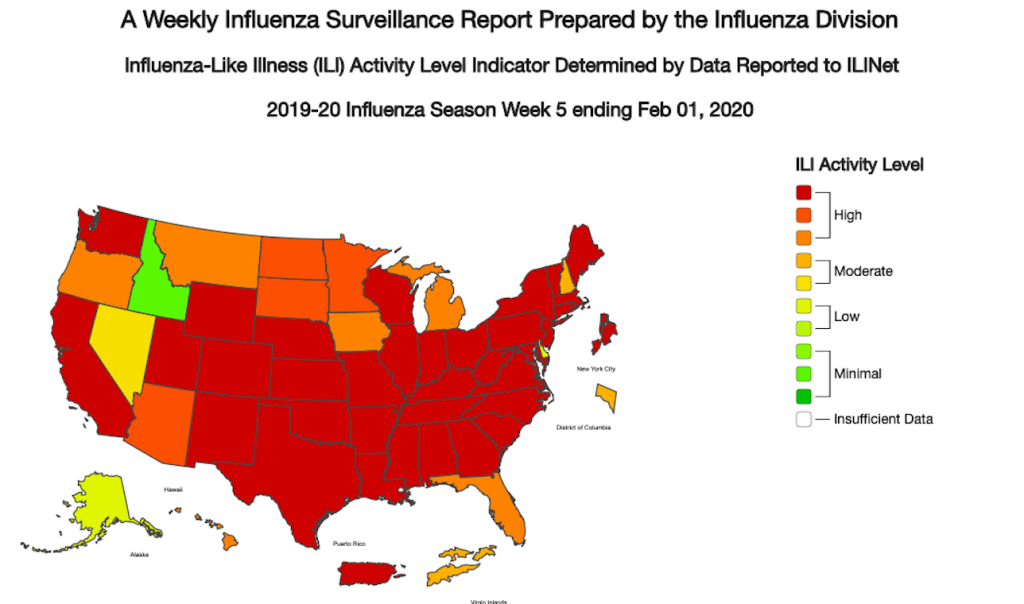
The flu comes every year and causes an epidemic in the United States, heck thats why its called “flu season” isn’t it? This years flu seems to be taking a toll on the American people. The CDC is reporting that there are high levels of illness due to influenza among a majority of the states, as seen below.

CDC report on High levels of influenza related illnesses across the continental US

While this may seem scary, this is in fact normal flu activity. Likewise, the CDC reports that the indicators of severity, mainly hospitalizations and deaths, are not high at this point in the season.

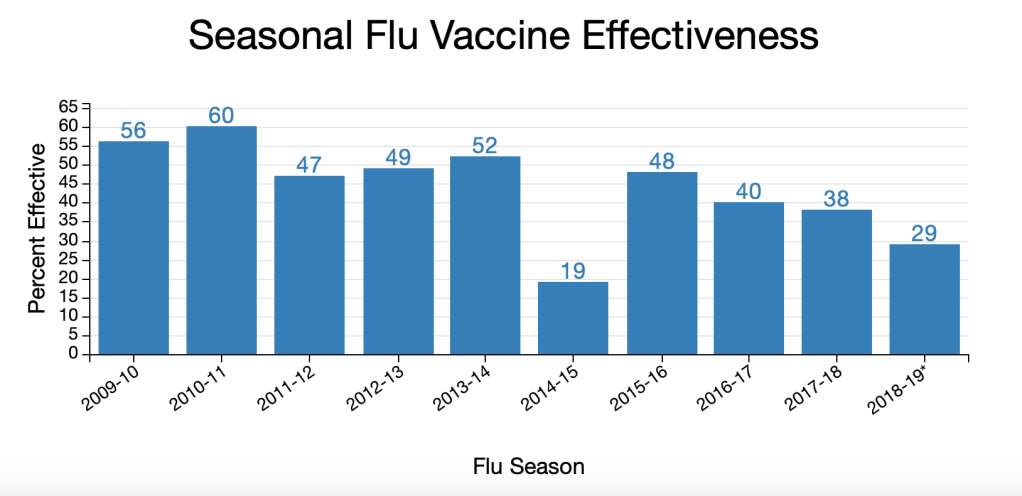
So how has the US prepared for this yearly flu takeover? VACCINES!! Each year the CDC calculates the effectiveness of the vaccine in which we have all (hopefully) received. As it is too early in the year to calculate the overall effectiveness of this years vaccines, we can look at past years to get a better understanding of what this may look like.

CDC report on the efficacy of past vaccines

Usually, the vaccine is about 40-60% effective, meaning you can still get sick from the flu but you are about half as likely as those who didn’t receive the vaccine. Moreover, because you received the vaccine, your symptoms may be reduced and likely cause the flu to not suck as much in simple words. What does this mean?? You should get vaccinated.

What happens now that I have the Flu?

Just diagnosed with the flu? Don’t panic, there are things you can do to prevent the spread of this disease and feel better quicker. First off, stay away from others! Try not to touch many things and take care to rest and recover. Take antivirals (not antibiotics) within the first 48 hours of being diagnosed in order to reduce the severity of the symptoms. The NIH suggests that you take it very easy, and hydrate with plenty of fluids such as water and juice. Of course, sense this is a disease of the respiratory system, don’t smoke as this can only bother your airways more. Just remember, you can do this!!

Photo by Prateek Katyal on Pexels.com

You can’t trust all science

The case series published by Andrew Wakefield consisted of only 12 individuals, a very small sample size to make a relevant conclusion. He found his cohort of children through the department of pediatric gastroenterology who had a history of pervasive developmental disorder. The research presented by Wakefield has been refuted by many independent scientist following his findings. These scientists published their results within a year, in order to show that Wakefield’s findings were not conclusive. Findings were reported in a variety of scientific journals including the lancet, the British Medical Journal, and CMAJ to name a few.

These findings led to a fear of vaccination related autism and therefore a reduction in the amount of children who received the MMR vaccine. The article published by Wakefield could have been a cause of the measles outbreaks in the USA and Canada. A scientific review article discovered that Wakefield had been funded by by lawyers who had interests in lawsuits against vaccination companies, making his motives very questionable. More so, Wakefield had picked and chosen his data that supported his case, while also falsifying facts. Lastly, Wakefield had completely ignored the necessary ethical clearances, as he had gained his information through “invasive investigations” (Rao).

It is appalling that this type of research was allowed to happen, let alone be published! What ever happened to peer reviewing?

Whats happening now?

During 2019, the CDC reported that 1,282 individuals were confirmed to have measles in the USA. This dates as the greatest number of cases since 1992… Get vaccinated!! Additionally, there were 3,474 cases of mumps. The CDC is currently trying to combat this problem as 89% of the people who contracted these diseases were unvaccinated. In order to combat this, they are attempting to build vaccine confidence. Specifically, the CDC wants to “offset misinformation” and “disseminate accurate information” to these pockets of the US population that do not retrieve vaccinations. The hardest part of this task is going to be able to effectively communicate this information in a culturally appropriate way. I believe partnerships with trusted community members is of utmost importance.

Get vaccinated, these things are easily avoidable
Photo by Daniel Frank on Pexels.com

Rao, T. S., & Andrade, C. (2011). The MMR vaccine and autism: Sensation, refutation, retraction, and fraud. Indian journal of psychiatry53(2), 95.